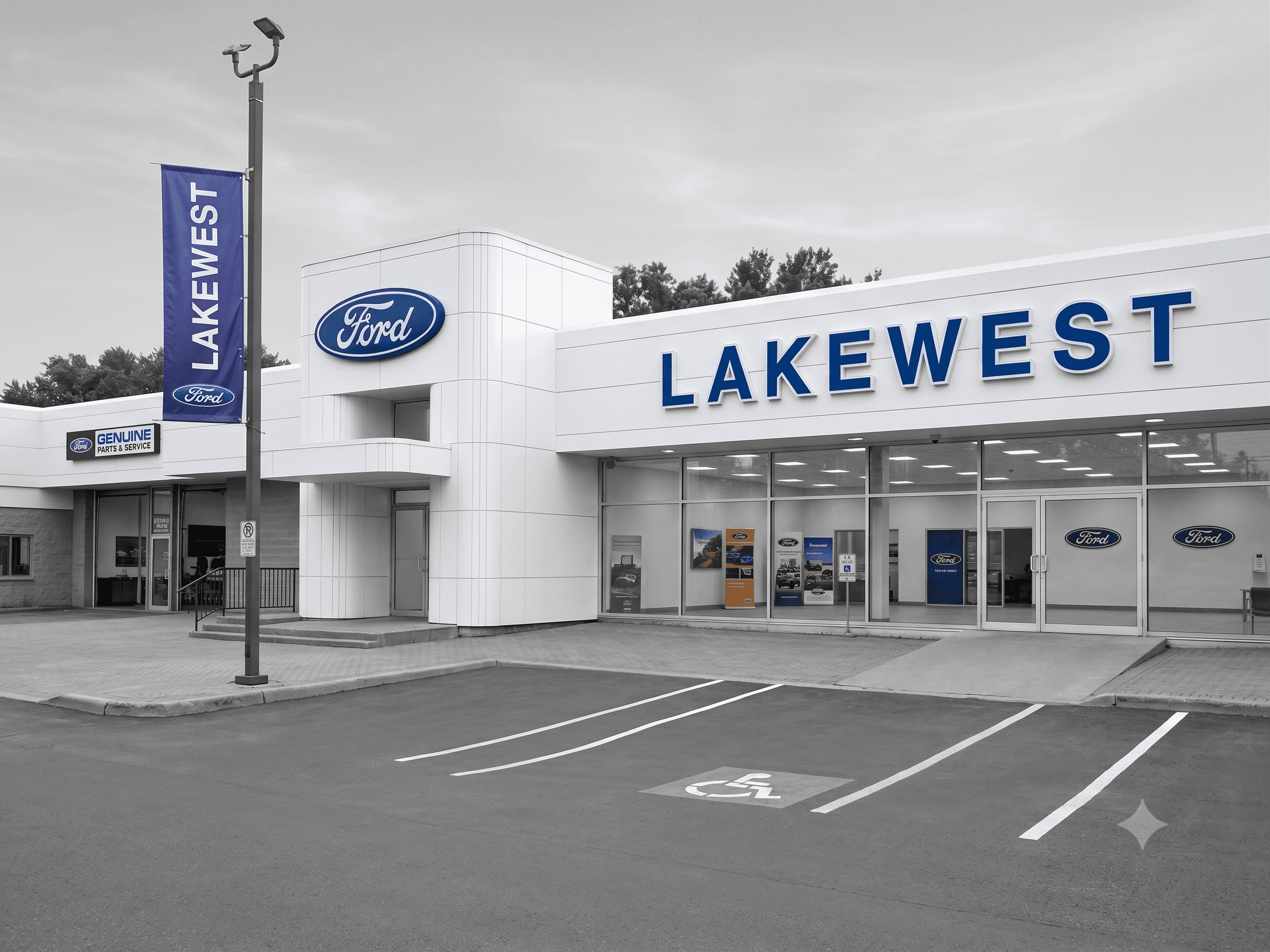
Material System
Aluminum Composite Material (ACM)
Aluminum composite material is a flat panel made of two thin aluminum sheets bonded to a core material. It's fabricated into panels and routed, folded, or shaped to fit a building's facade, signage, or canopy geometry.
Appearance & Finish
ACM is typically specified for its flat, precise, contemporary appearance and consistent finish across large surfaces — visible on dealership towers, restaurant storefronts, and retail facades where a clean, uniform panel line is part of the design intent.
Commercial Applications
- Building facade and tower cladding
- Sign cabinet faces and fascia panels
- Canopy and soffit surfaces
- Accent panels integrated with glazing and metal trim
Fabrication
Panels are routed and folded to spec, with attention to reveal lines, corner returns, and panel joints so the finished surface reads as a single coordinated system rather than a patchwork of pieces.
Installation & Project Coordination
Installation is coordinated with the substructure, glazing, and signage going on the same elevation, since ACM panels are usually one part of a broader exterior scope rather than a standalone finish.
Frequently Asked
Is ACM the same as solid aluminum panel?
No. ACM is a composite — two aluminum face sheets bonded to a core — while solid aluminum panel is a single sheet of aluminum. They're used for similar applications but behave differently in fabrication and are specified for different reasons.
Can ACM be used for both cladding and signage?
Yes. ACM is common for both facade cladding and sign cabinet construction, which is part of why it shows up across dealership, retail, and restaurant exteriors as a coordinating material between the building and its signage.
Related Capabilities
Relevant Sectors